.jpg)
Why detailed compliance control matters
Catch issues early
We identify missing documents and pass or fail risks before the submission reaches its final hours.
Check every instruction
A compliance matrix keeps mandatory requirements visible from the first review onwards.
Reduce preventable disqualification
Final audits help stop simple submission errors undoing weeks of good technical work.
Catch avoidable failures before they cost you
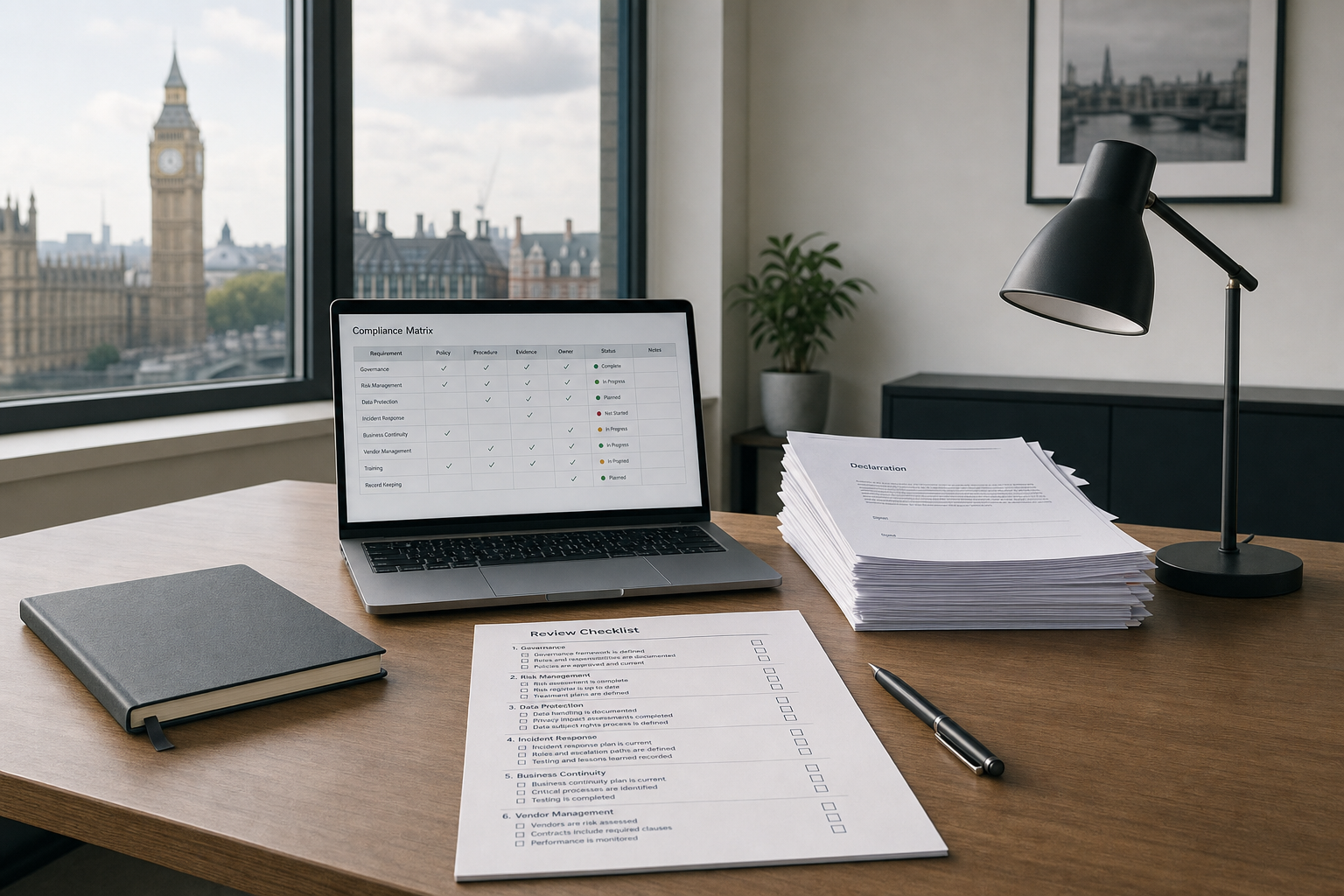
A tender can fail for reasons that have little to do with how capable your business is. Missed declarations, wrong file names, absent signatures, weak attachments or answers that only cover part of the question can all damage a submission before scoring starts. We review those details methodically. With Valence, compliance support starts by mapping each instruction, pass or fail condition, scored question and required document into a working matrix, so the team knows exactly what must be produced and what cannot be missed.

Check the full submission, not just the wording
Good compliance work is more than proofreading. A review with Valence can cover eligibility checks, word counts, file formats, naming conventions, policy gaps, certificates, declarations and portal requirements, along with whether each answer actually responds to the full question asked. We also run a final submission audit to test consistency across responses, appendices and commercial documents, which is often the last chance to spot a mismatch before a portal closes.
Frequently asked questions
What does a tender compliance review actually check?
We check the procurement instructions, pass or fail conditions, scored questions, attachments, declarations and portal rules against the working submission. That includes word counts, file formats, naming conventions, signatures and supporting evidence. We also review whether each answer addresses every part of the question rather than only the first obvious point.
When should compliance work happen in the bid process?
Ideally, it starts at the beginning. Building a compliance matrix early helps the team plan around mandatory documents and submission rules before drafting gathers pace. We also recommend a later review and a final audit, because new issues often appear once sections, attachments and commercial documents are brought together.
Can you review attachments as well as written answers?
Yes. Attachments often create as much risk as the narrative responses, especially where policies, certificates, pricing files and declarations all have separate rules. We review them alongside the written submission so the bid is checked as one package, not as a set of unrelated documents prepared by different people.